
Pixfra Mile 3: the new generation of pocket thermal with NETD 15 mK and a 3-in-1 wheel
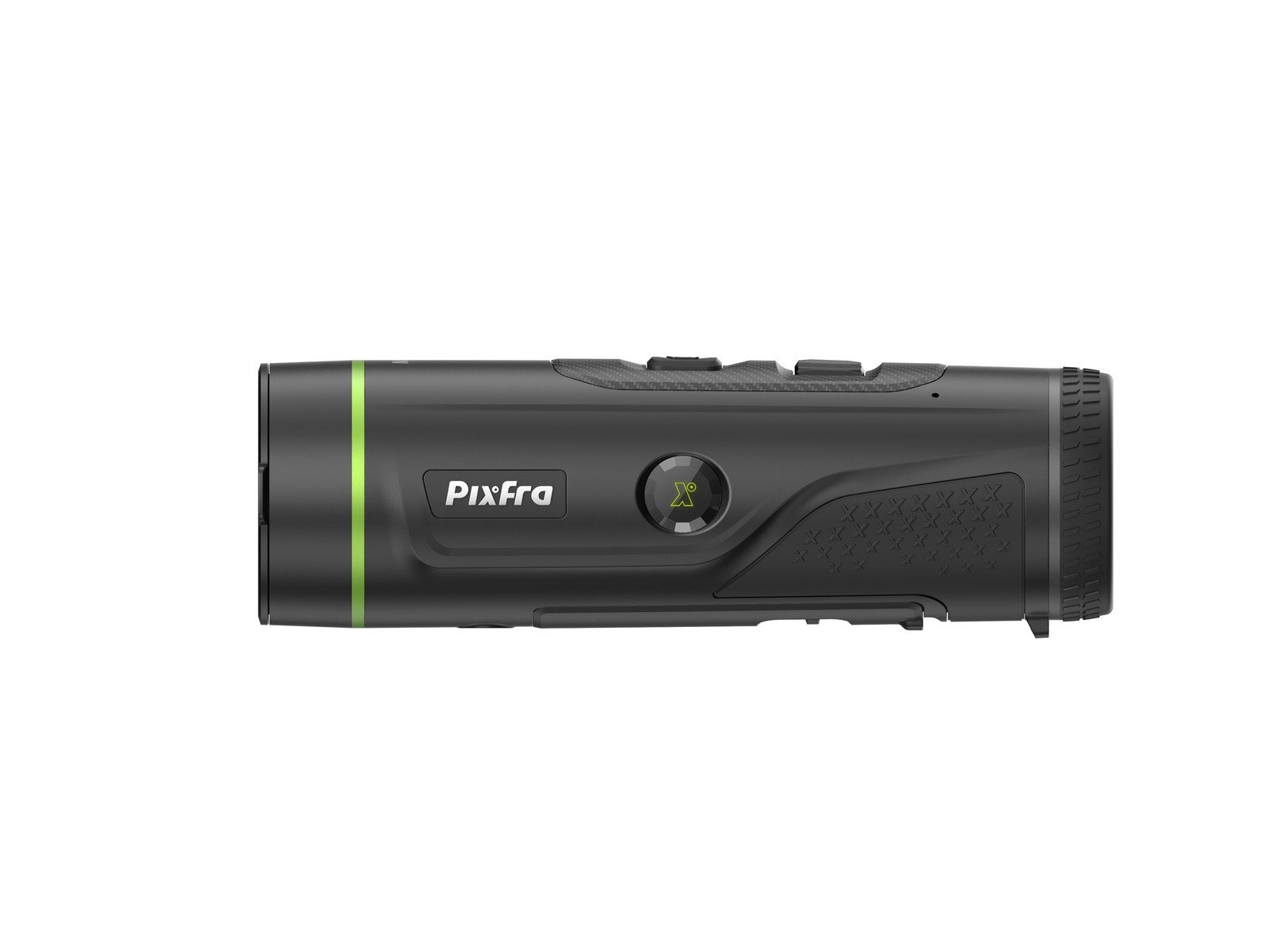
Pixfra launches the third generation of its best-selling pocket thermal monocular. The Mile 3 series comes with the slogan "Integrated. Pocket-sized. No compromise." and brings to the entry class things you used to find only in more expensive devices: sensor sensitivity of NETD 15 mK, the new PIPS 3.0 Pro AI image processing, the industry's first integrated 3-in-1 electronic wheel and a magnesium alloy body weighing around 300 g. The M325, M335 and M625 are on sale from 15 September 2026, the M625 LRF with rangefinder arrives at the end of September. Stock is expected by the end of September.
Crystal-clear image: NETD 15 mK and PIPS 3.0 Pro
At the heart of the Mile 3 is a thermal sensor with NETD 15 mK sensitivity and a resolution of 384 × 288 px (M325, M335) or 640 × 512 px (M625, M625 LRF). The previous Mile 2 generation had 25 to 35 mK - the new sensor captures much finer temperature differences, which is decisive in rain, fog, dense woodland or at dawn, when the temperature of game and background almost equalise. Detection range is 1,300 m with the 25 mm lens and 1,800 m with the 35 mm lens.
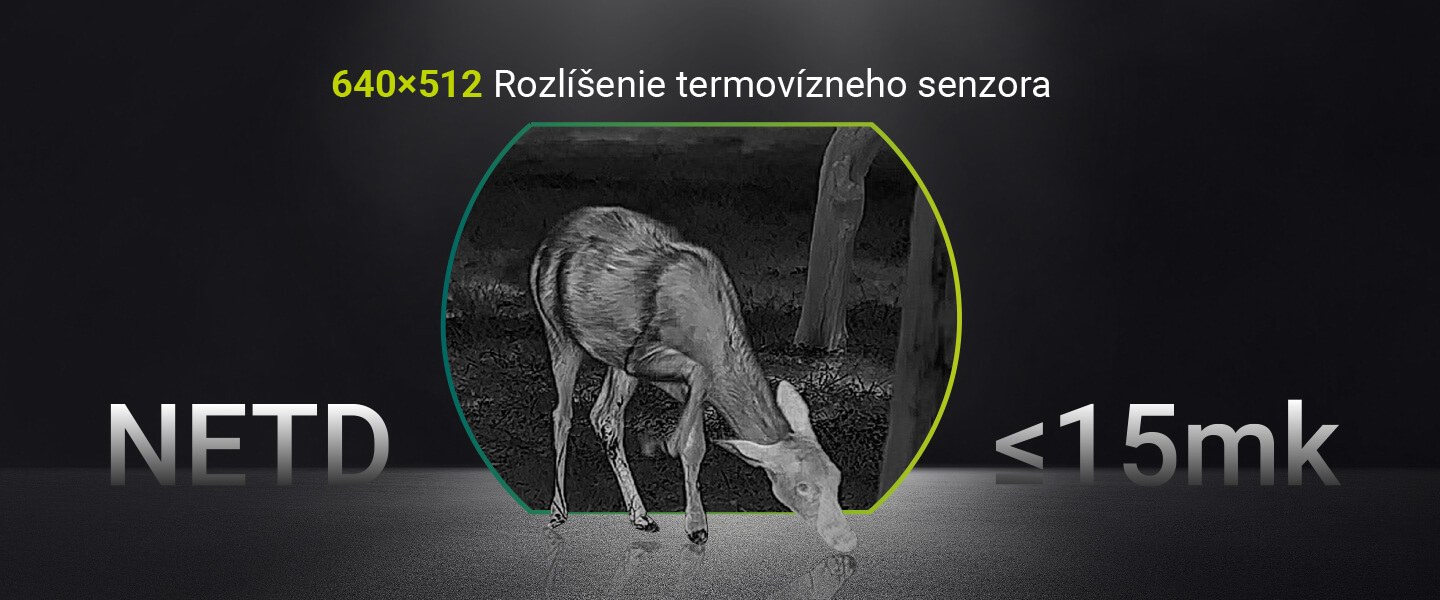
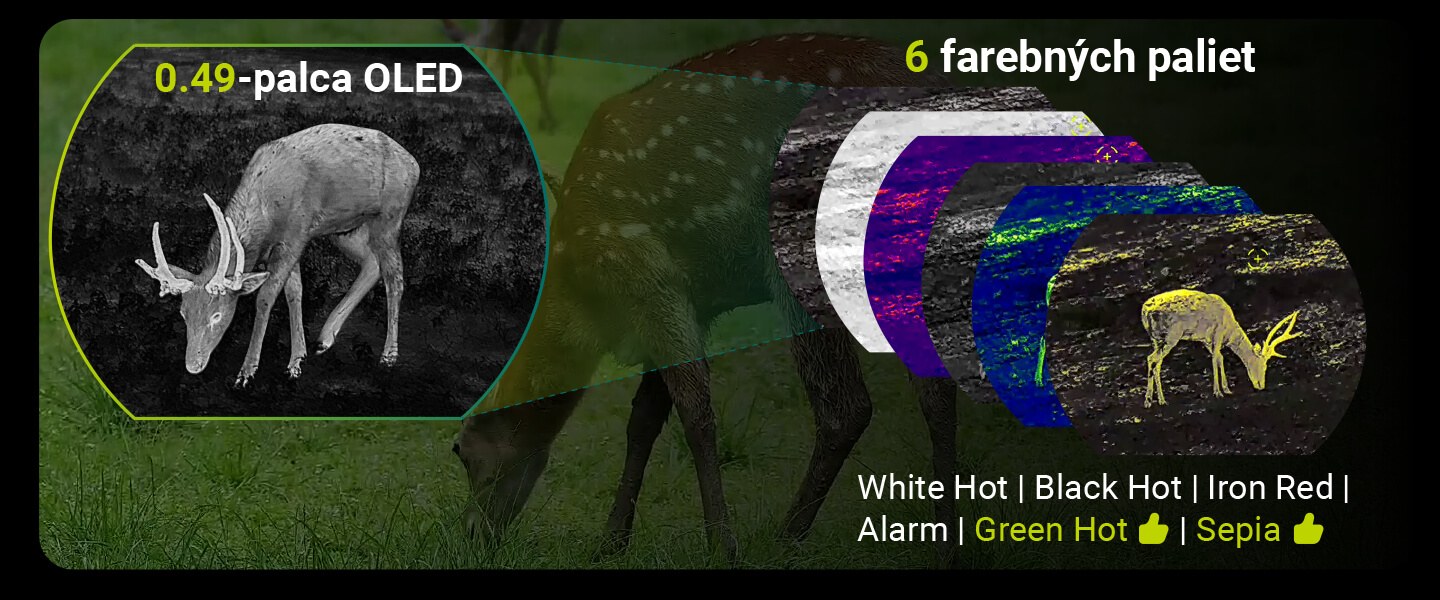
Image processing is handled by PIPS 3.0 Pro with artificial intelligence. Compared with PIPS 2.0 it renders fine detail more clearly, reduces noise, speeds up sensor response in the cold and balances the image better at short and long range.

You look through a 20× eyepiece at a 0.49" OLED display with 1,920 × 1,080 px - the Mile 2 had 0.32". The impression is like a 90-inch screen from three metres. Six colour palettes remain, and the Sepia and Green Hot modes now show the target in red for faster identification.
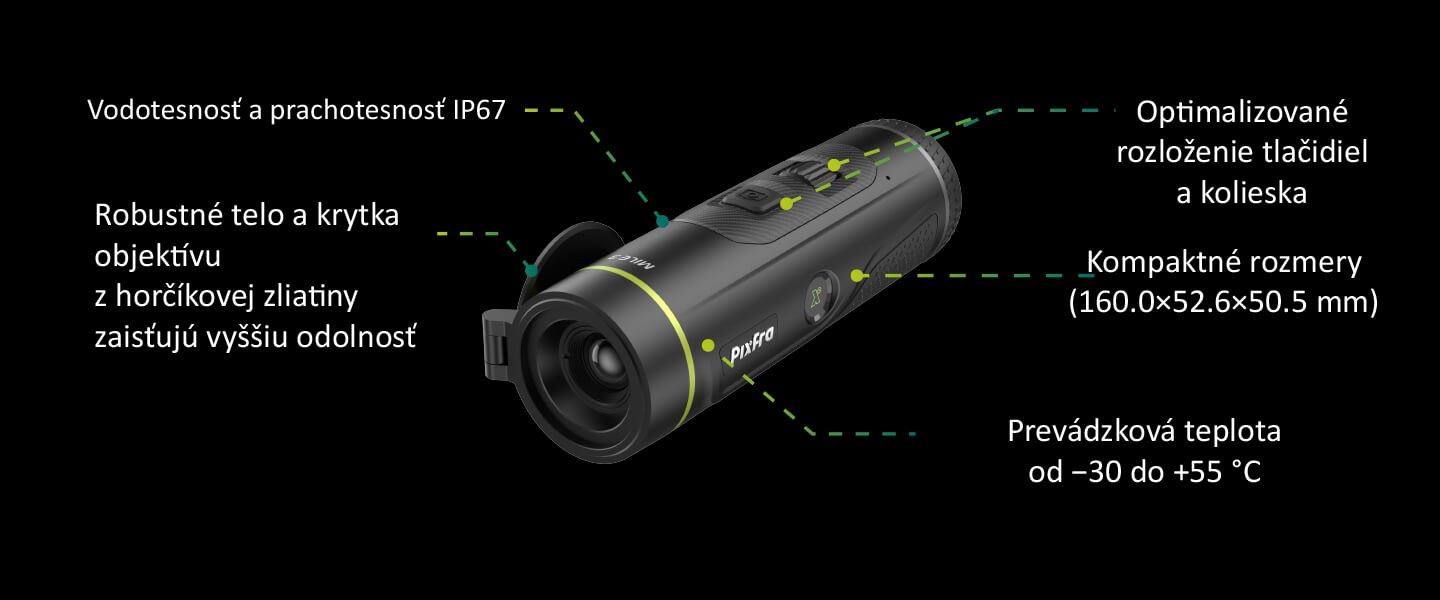
One-hand operation: the 3-in-1 wheel and a pocket-sized body
The biggest novelty is the integrated 3-in-1 electronic wheel. Electronic focus, digital zoom and menu navigation are in one control. You operate it silently, one-handed, blind and without moving your fingers - in complete darkness, from a vehicle, in thick gloves or with a rifle in the other hand. The wheel passed a test of 100,000 presses and 150,000 turns.
Body and lens cap are magnesium alloy, IP67 rated, operating from -30 °C to +55 °C. Weight is 290 to 313 g without battery, dimensions 160 × 52.6 × 50.5 mm - the Mile 3 fits in a jacket pocket.
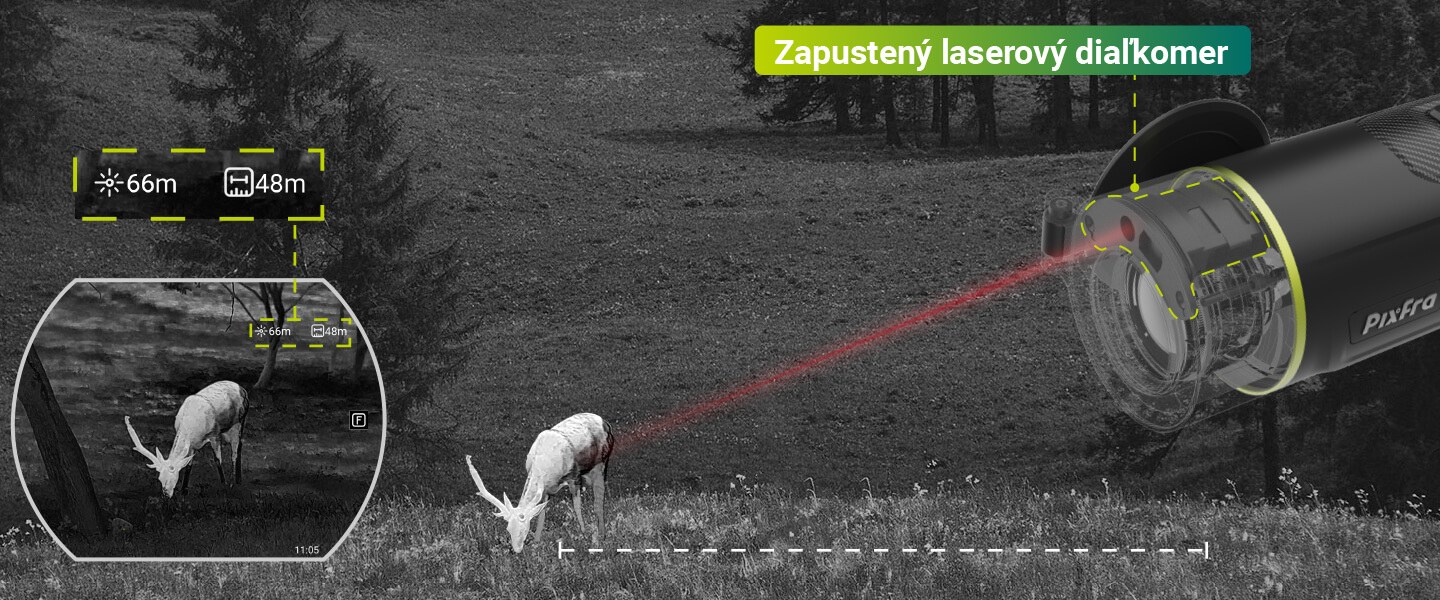
Recessed laser rangefinder (M625 LRF)
The M625 LRF version is the first in the industry with a fully recessed laser rangefinder - no protrusion, no play. It measures up to 1,000 m with ±1 m accuracy and shows both line-of-sight and true horizontal distance.
11 hours of runtime, 64 GB of memory and Wi-Fi
The Mile 2 had a built-in battery. The Mile 3 has two replaceable 18650 batteries - one in the device, the second in the box as a spare. Each lasts up to 5.5 hours, 11 hours in total; swapping in the field takes seconds and the device can also be charged from a power bank via USB-C. Built-in memory has grown from 16 to 64 GB, and dual-band Wi-Fi with the Pixfra Outdoor app streams the live image to up to four phones. Start-up is 50 % faster than the Mile 2.
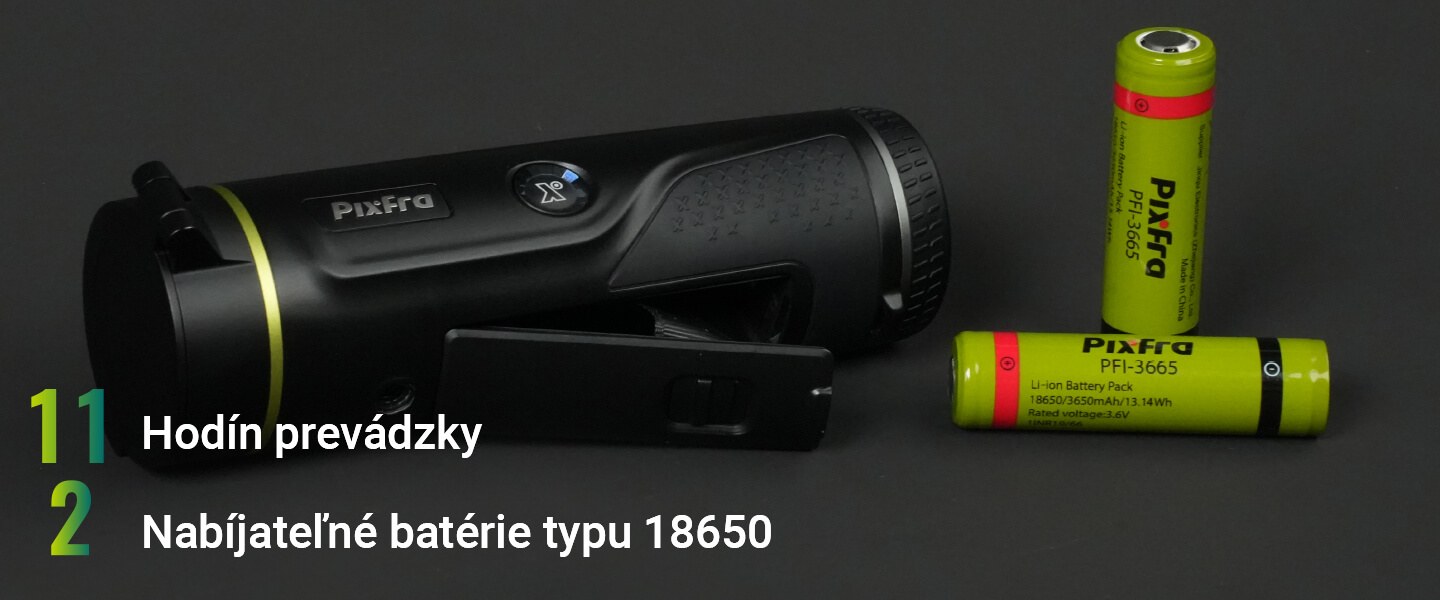
The box contains a protective pouch, wrist strap, battery charger, USB cable, fold-down eyecup, lens cloth and two 18650 batteries.
What has changed from the Mile 2
| Mile 2 | Mile 3 | |
| NETD | 25 – 35 mK | 15 mK |
| Image processing | PIPS 2.0 | PIPS 3.0 Pro with AI |
| Display | OLED 0.32" | OLED 0.49" |
| Controls | buttons | 3-in-1 electronic wheel |
| Body | plastic | magnesium alloy |
| Battery | built-in | 2× replaceable 18650, 11 h |
| Memory | 16 GB | 64 GB |
Four models - which one to choose
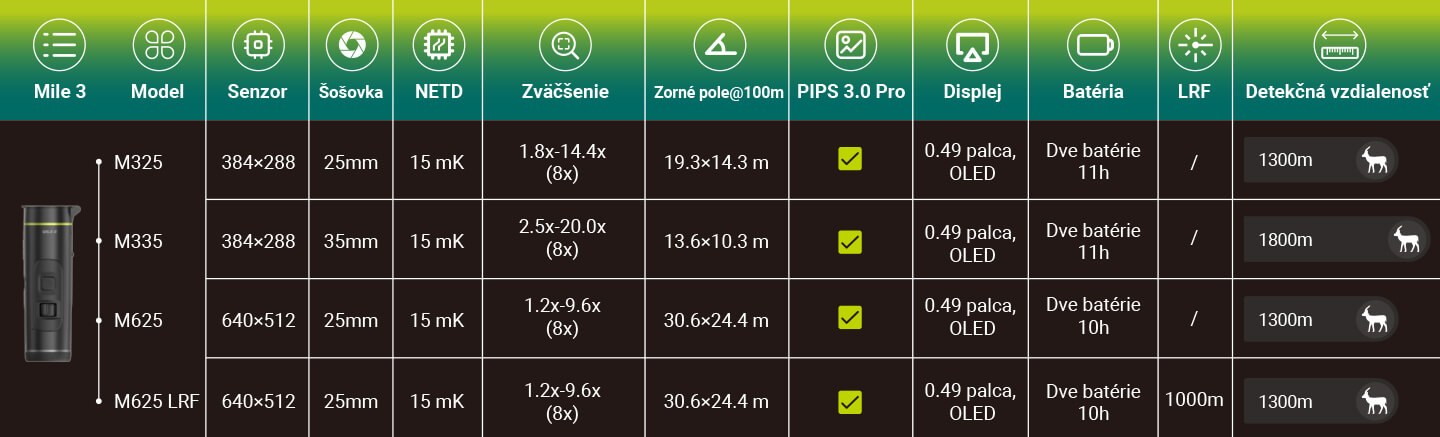
| M325 | M335 | M625 | M625 LRF | |
| Sensor | 384 × 288 | 384 × 288 | 640 × 512 | 640 × 512 |
| Lens | 25 mm | 35 mm | 25 mm | 25 mm |
| Base magnification | 1,8× | 2,5× | 1,2× | 1,2× |
| Detection | 1 300 m | 1 800 m | 1 300 m | 1 300 m |
| Rangefinder | - | - | - | 1 000 m |
| Weight | 300 g | 310 g | 290 g | 313 g |
| Product page | M325 | M335 | M625 | M625 LRF |
Summary
The Mile 3 answers the question of how to get top sensitivity, a large display, one-hand operation and replaceable batteries into an entry-class pocket device. All four models are expected in stock by the end of September. If you are unsure which lens to choose, write to us or call.